

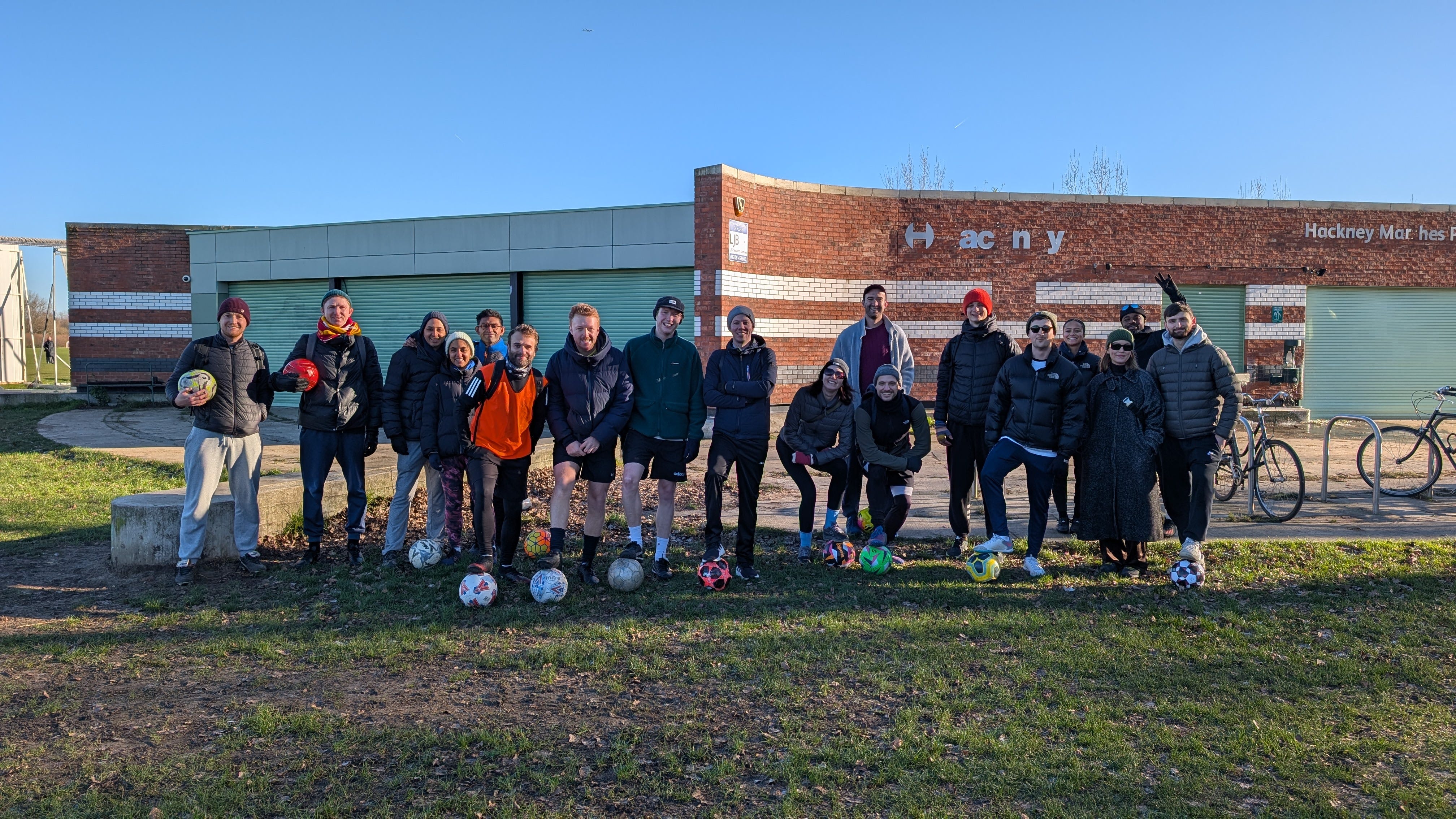
On January 4th, an elite group of random individuals travelled from all across London to score a goal in every goal on Hackney Marshes.
It was a wonderful coming together of like-minded people. All there for the sake of pointless fun in the community (and lifelong bragging rights).
Each person netted 144 goals over roughly 2 hours, and ate 0.8 Sunday roasts at the pub (that's an average as some people ate at home).
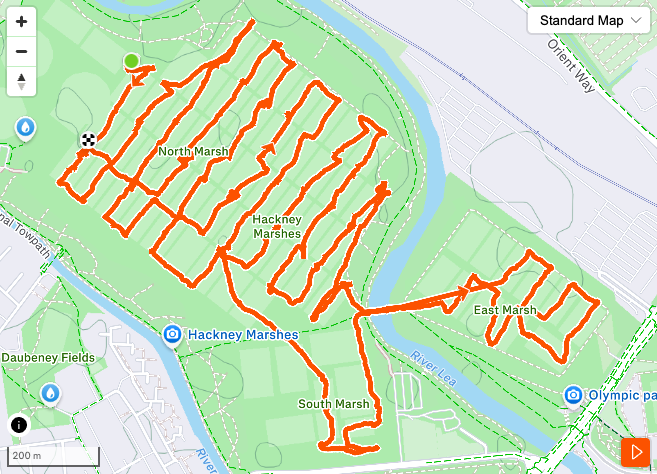
It was not a race. Your time didn’t matter. There were trick shots, long-distance hoofs, shameless tap-ins, and re-creations of some classic goals.
And it's growing in attendance...
- In the first year, 2 people did it (me and my pal Ben).
- Year 2, we had 7 people.
- And in year 3, there were 22 people.
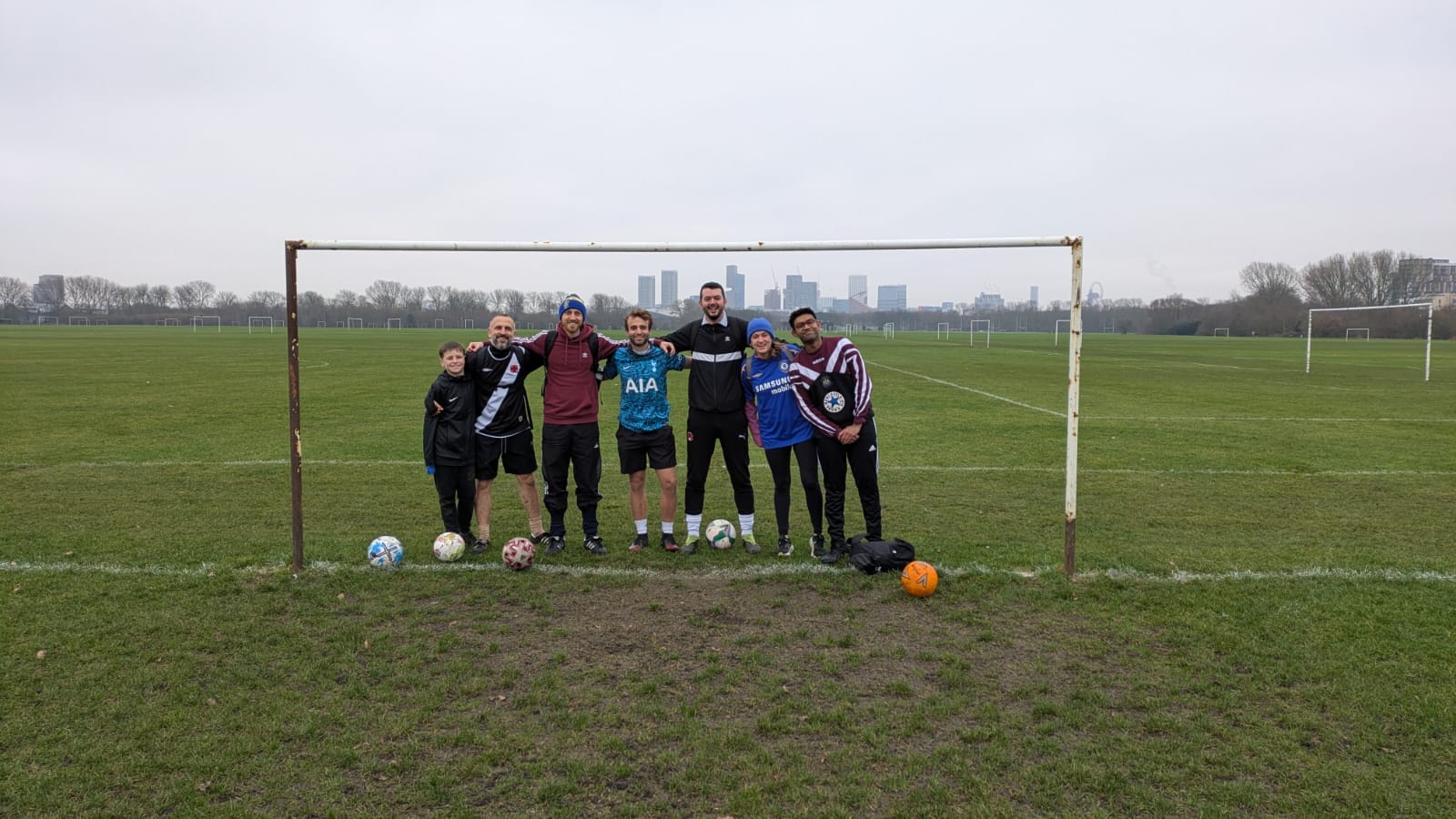
The challenge wasn’t organised to help with fitness, make a statement, or prove anything to anyone. It happened because the idea was so stupid, it absolutely had to be done.
What interested me afterwards wasn’t whether it was fun, but why something so unnecessary felt so compelling.
To answer this phenomenon - below are some scientific explanations from people way smarter than me (but have they scored a goal in every goal on Hackney Marshes?).
The power of ‘challenging yourself’
Researchers studying motivation consistently find that people are more engaged when difficulty is voluntary rather than imposed.
In Flow, Mihaly Csikszentmihalyi describes how meaning emerges when people choose constraints that are just hard enough to demand attention, but pointless enough to feel free. eg: running across 70 football pitches.

Ditching productivity
Pointless endeavours offer something increasingly rare in a world full of productivity hacks: a space where optimisation, branding, outcomes and self-improvement are irrelevant.
The sociologist David Graeber argued that as productivity has become a moral standard within society, people instinctively seek out activities that refuse to justify themselves - not to rest, but to escape being measured.
Completing things is disgustingly satisfying
Psychologists call it the “completion bias”. It’s when humans feel a disproportionate urge to finish arbitrary things once they’ve started them, even when the system has no reward - like a puzzle, or re-organising the airing cupboard for the millionth time whilst my girlfriend looks on in mild horror.

It’s not even about the activity
Anthropologists such as Émile Durkheim1 and Victor Turner2 note that many group activities exist not because they are useful, but because they are shared. The office Secret Santa, new year’s day swims, bank robberies. All great with others, boring by yourself.
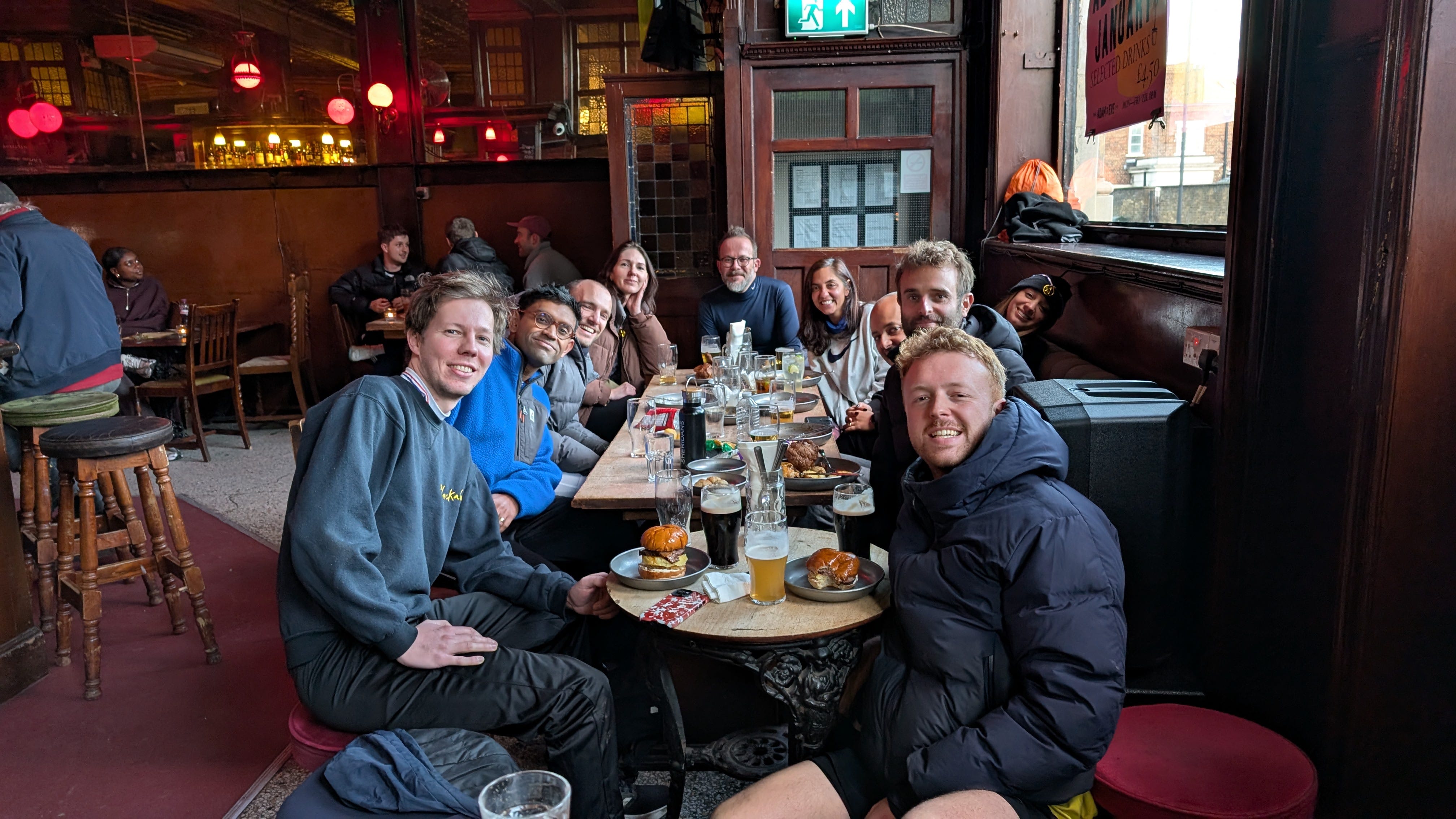
Meaning isn’t embedded in the action. It’s generated socially afterwards. The ‘pub after’ is not a coincidence. It’s secretly why we’re all there.
It was actually a Buddhist ritual
Zen teachings on anattā (non-self) frame value in doing without striving, comparison or outcome. For a short time, you are not who you usually have to be - just someone doing the same thing as everyone else. In this instance - pelting a football into 144 goals. So yes. It turns out scoring a goal in every goal on Hackney Marshes was a form of Buddhist meditation.3
Namaste 🙏
The Elementary Forms of Religious Life (1912), Émile Durkheim - rituals persist because they generate collective effervescence rather than utility.
The Ritual Process: Structure and Anti-Structure (1969) by Victor Turner
introduces communitas - social bonding created through shared, often absurd or non-instrumental ritual activity.
D. T. Suzuki, Zen Buddhism (1949); Thich Nhat Hanh, The Miracle of Mindfulness (1975).